Explorations and Excavations
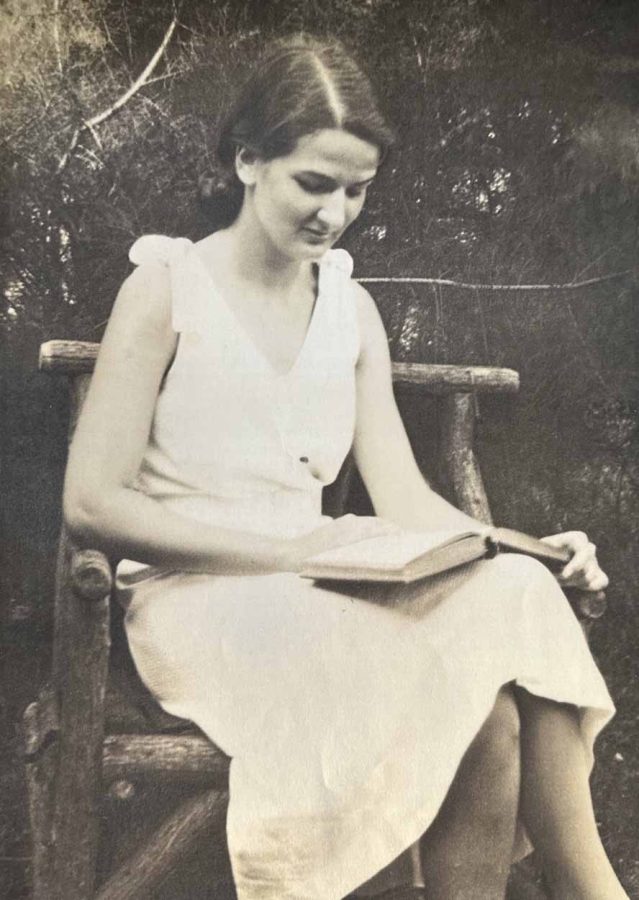
Alice Crafts Shaver, 1914 – 2003
Archives, as distinct from libraries or museums, are depositories of specific collections of information or objects that may be of historical or cultural significance. Libraries are more likely to focus on published materials, and generally make themselves available for wider public access. One can think of an archive as a place for deposits of information, while a library is geared more for withdrawals, as it were. Researchers may avail themselves of both kinds of institutions in the course of study.
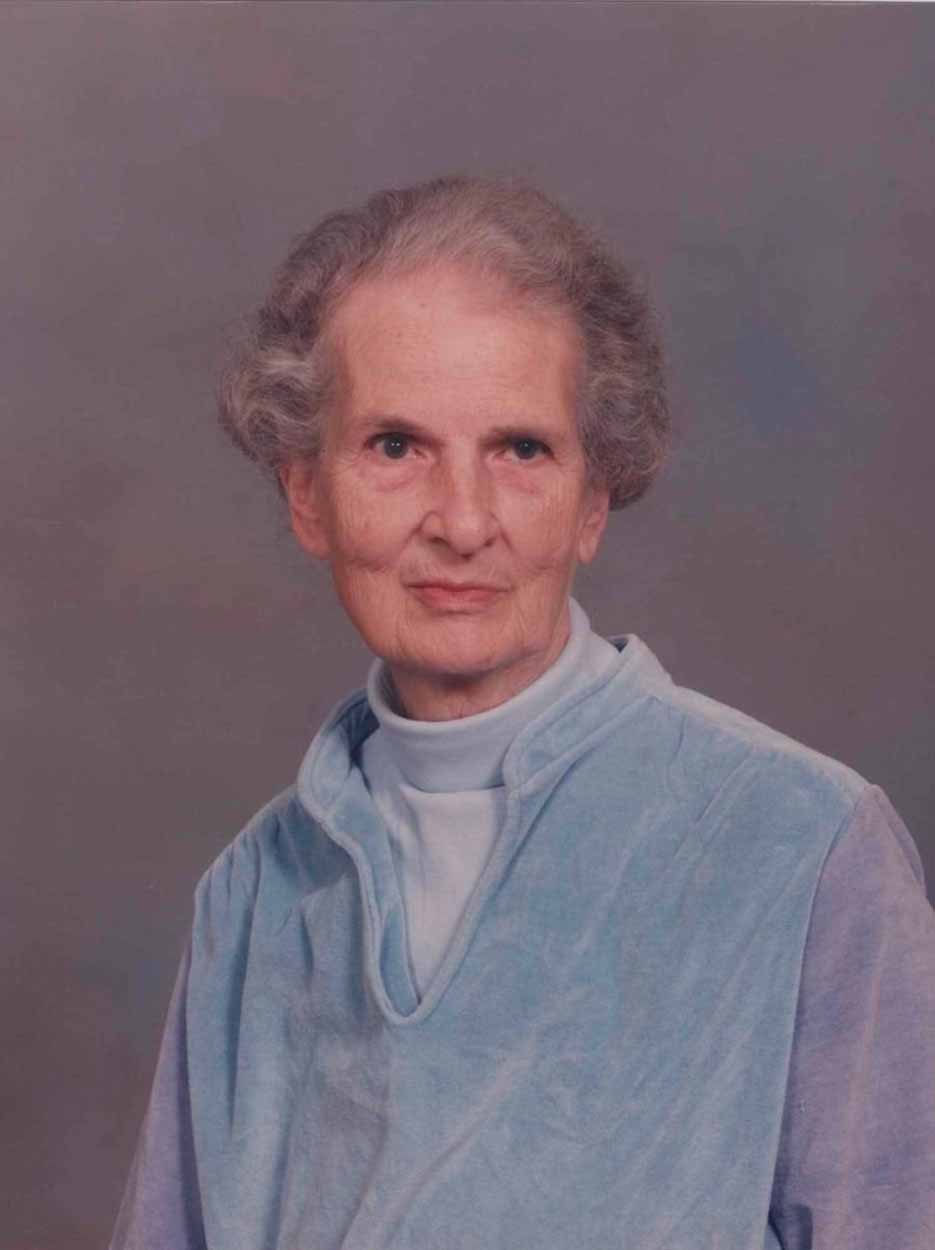
I am currently involved with creating archival deposits of aspects of a cache of papers concerning my late mother, Alice Crafts Shaver, who was born September 12, 1914, in Oberlin, Ohio; and died there on November 26, 2003.
Who was Alice? Why an Alice-centric archive?
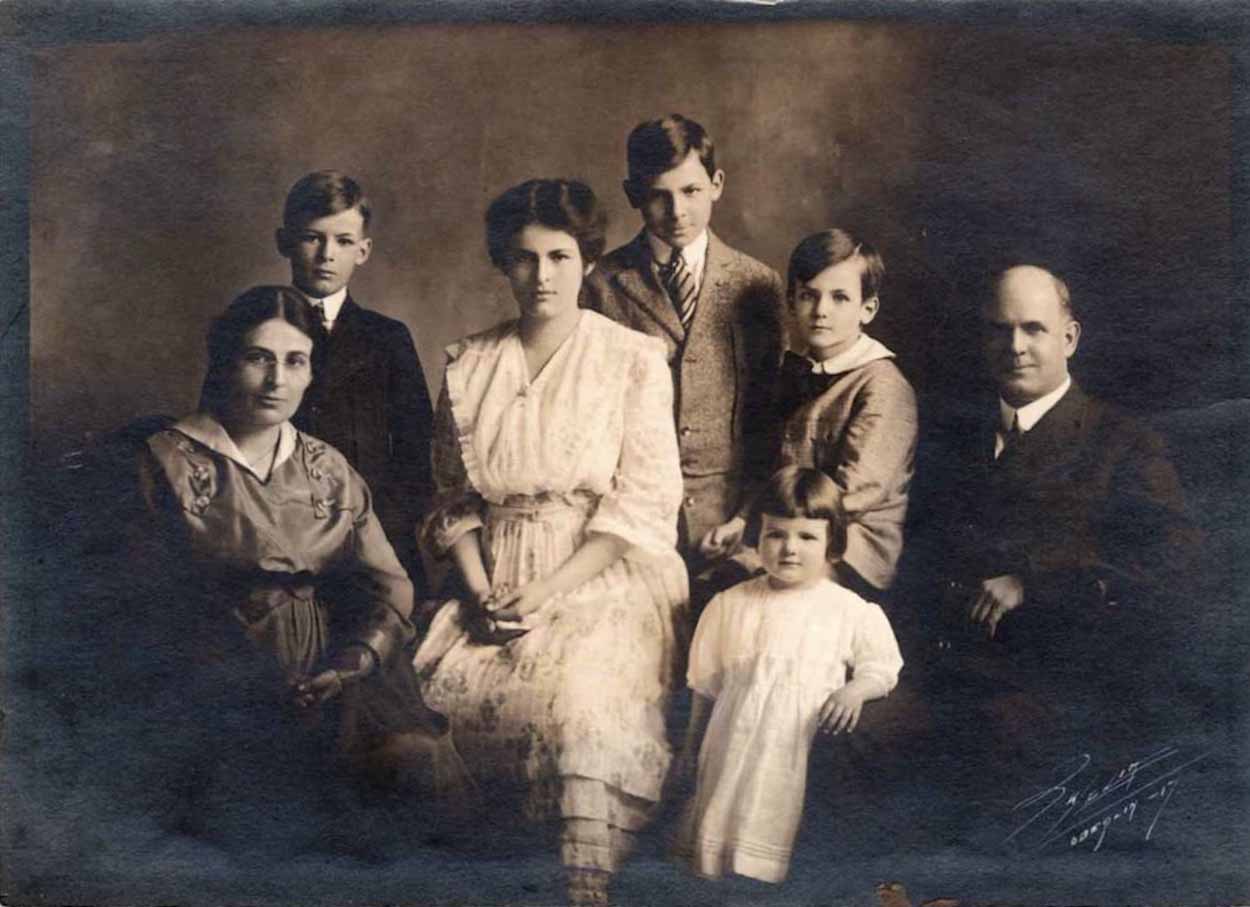
Although Oberlin College and Oberlin, the town, are more significant historically and culturally far beyond northern Ohio — the first college in the country to grant degrees to women, or to admit people of color, a stop on the Underground Railroad assisting fugitive enslaved people, home of the Anti-Saloon League — and claiming a number of famous people as graduates from the college or the conservatory of music, Alice Crafts, B.A., class of 1936, was not one of those famous people. She was what most people would consider an ordinary citizen. She did, however, leave us a most unusual record of her life and times, a tribute to the value of the written word, mostly in letters and journals.
The core of this cache is Alice’s letters. The earliest one we have is an unfinished note to her Aunt Mary and Uncle Spencer, written when Alice must have been about 6, about 1920. The last letters are from 2003, the year of her death.
Relatives and friends whom I’ve asked to share letters from her have been very generous. There are also audio and video recordings of her, and a recently surfaced, almost-forgotten box of food recipes, many given to her by friends or relatives. In addition to what I’ll call the specifically Alice-centric records, there are also written and visual records of members of generations preceding and following hers.
Alice was a reader and a writer, but, to the best of my knowledge, an unpublished one. Much of her life took place in Oberlin, whose current population is even now around 9,000. Given the brilliance of her thinking, sharpness of perception and deftness of verbal expression, I consider this a silence overdue for correction. Portions of her life during which she was a toddler, a sibling, a high school student, a college student, a faculty wife, a mother, aunt, great-aunt, a good friend and neighbor, a volunteer in many useful community undertakings, and, as a widow, resident of Kendal at Oberlin, were punctuated by periods of travel and residence abroad. But the base was always Oberlin.
Many of her extended family, including myself, were likewise born there, and educated either at Oberlin College, the Conservatory of Music, or the Academy of the late 19th century, or spent significant young years in the town. I am third-generation – three out of four grandparents, both parents, uncles, brother, cousins — to have attended the college or the conservatory. And because Alice’s mother, Annie Francis Crafts, and her paternal grandmother, Phebe Alcott Crafts, also resided in Oberlin during significant periods, in undertaking to preserve a cache of family papers, it makes sense to me to deposit some of them with the archives of the Oberlin Heritage Society, which is oriented more toward town than gown, as well as in the archives of the college.
Goals for this Archive and Beyond
My goals are multiple. First is to create a digitized selection of scanned and transcribed letters, selected passages from journals and photographs suitable for archival deposits in the archives of Oberlin College Archives and the Oberlin Heritage Center.
My second goal is to write about specific aspects of Alice’s life. She was a discerning observer of people and their doings, and did not always pull her punches. Here is a link of a private room with a tiny selection of letters written by Alice and her parents.
A third goal is to create a guide to the archival deposits suggesting how the sources might be of use to, for instance, historians of material culture, women’s lives, parenthood, small town life, public health, and beyond. We are looking into the possibility of handing over some of what is currently being organized to archives outside of Oberlin as well.
The Project
How we’ve gone about the processes of sorting, scanning, digitizing, preparing for transfer of information.
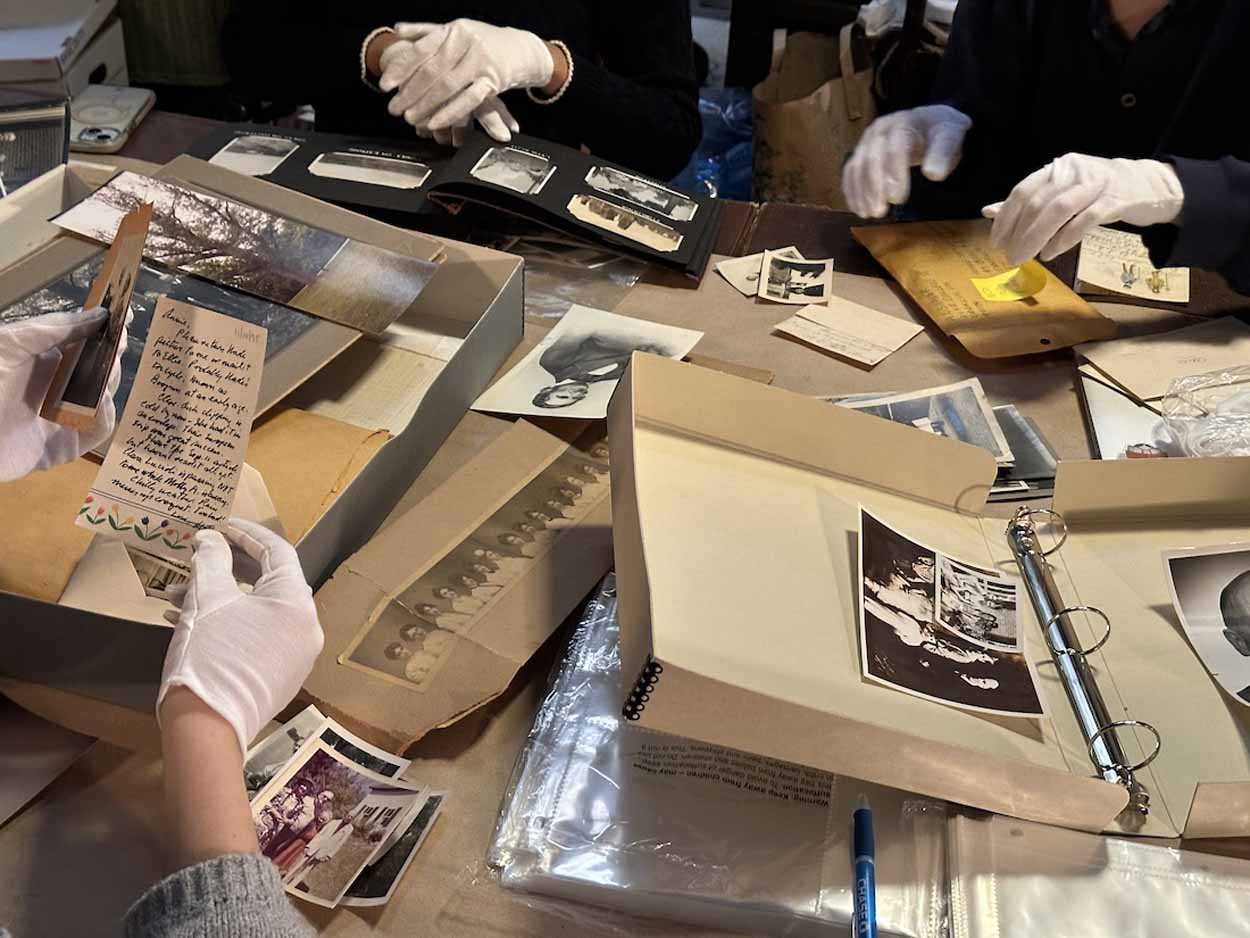
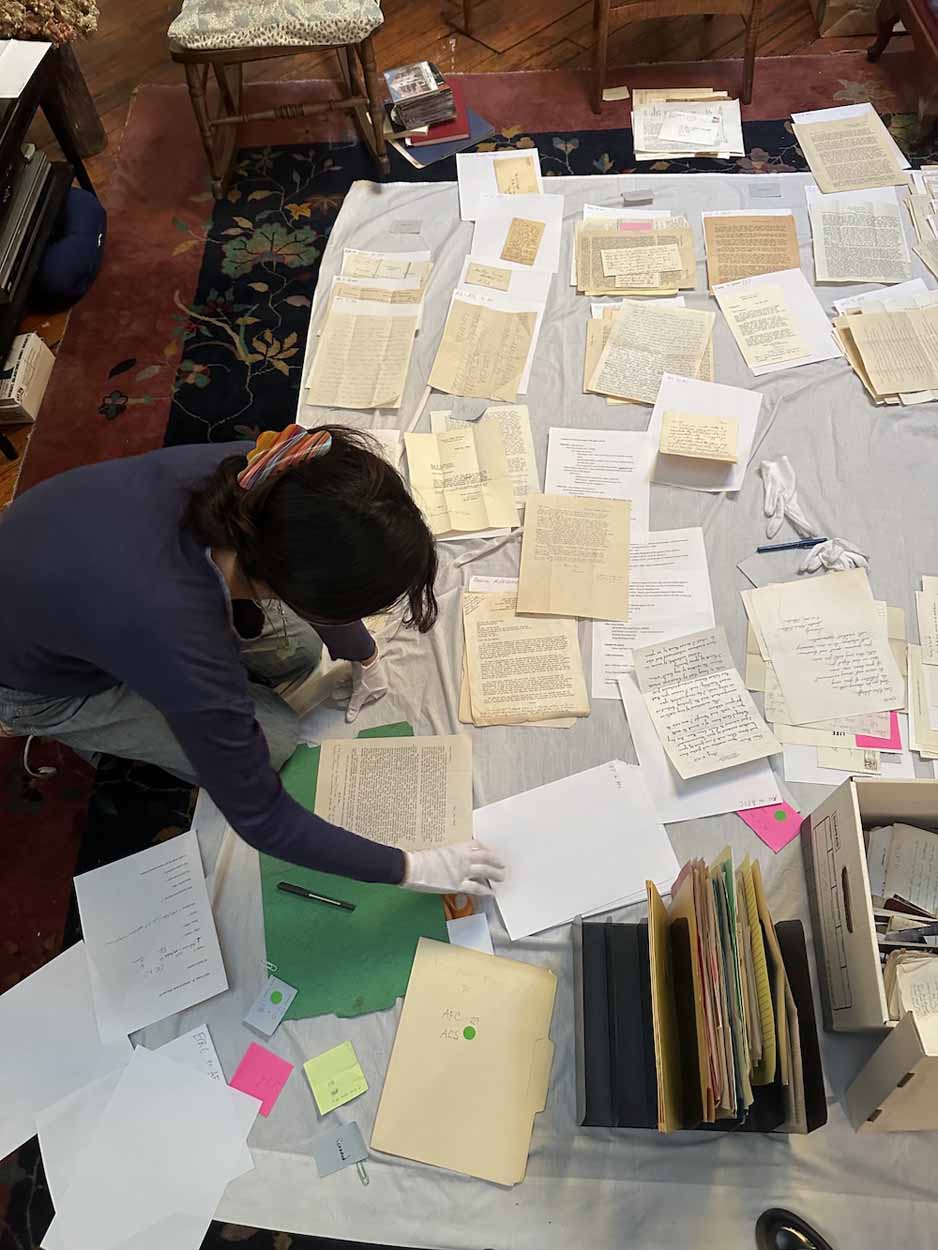
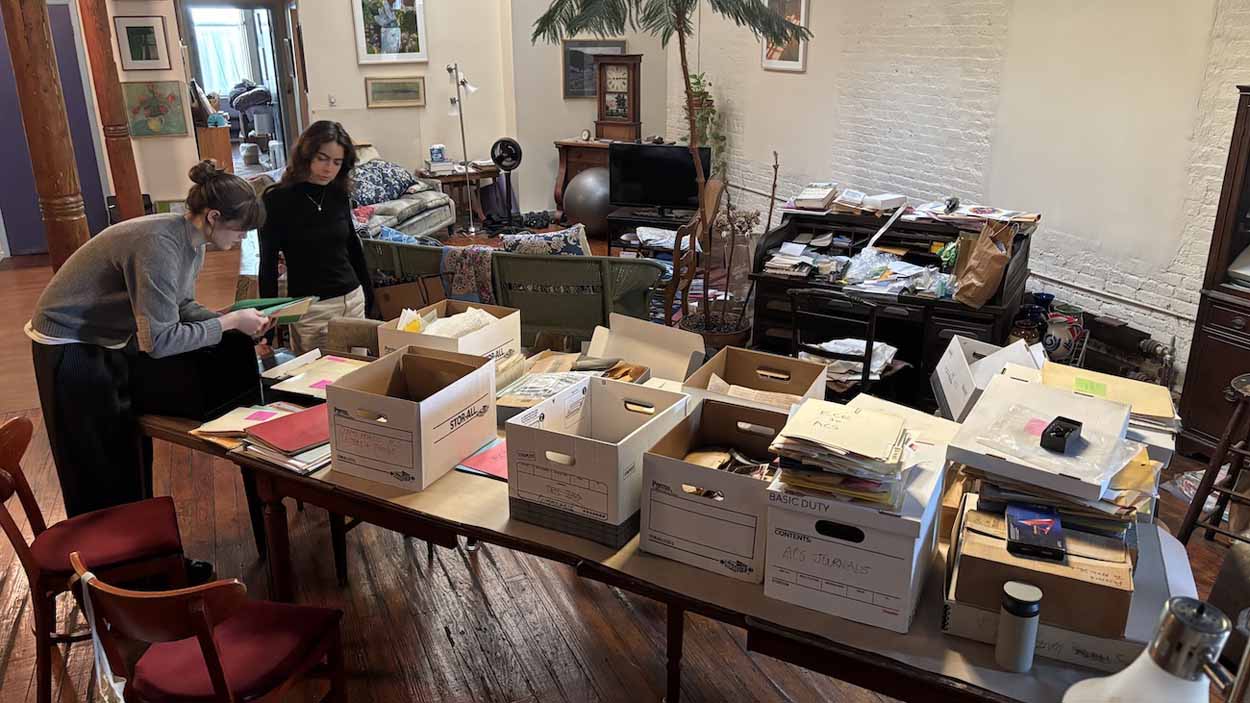
It’s definitely taking a village. I’ve held the bulk — and I do mean bulk — of the letters and photographs here in my Manhattan loft since 2003 in the form of cartons and folders of loose papers and photos, photo albums and journals. Over the following decade I did some preliminary classifying by correspondents, and in 2014 organized a public reading at the Salmagundi Club of New York called Alice at 100, with friends and relatives reading aloud from selected letters.
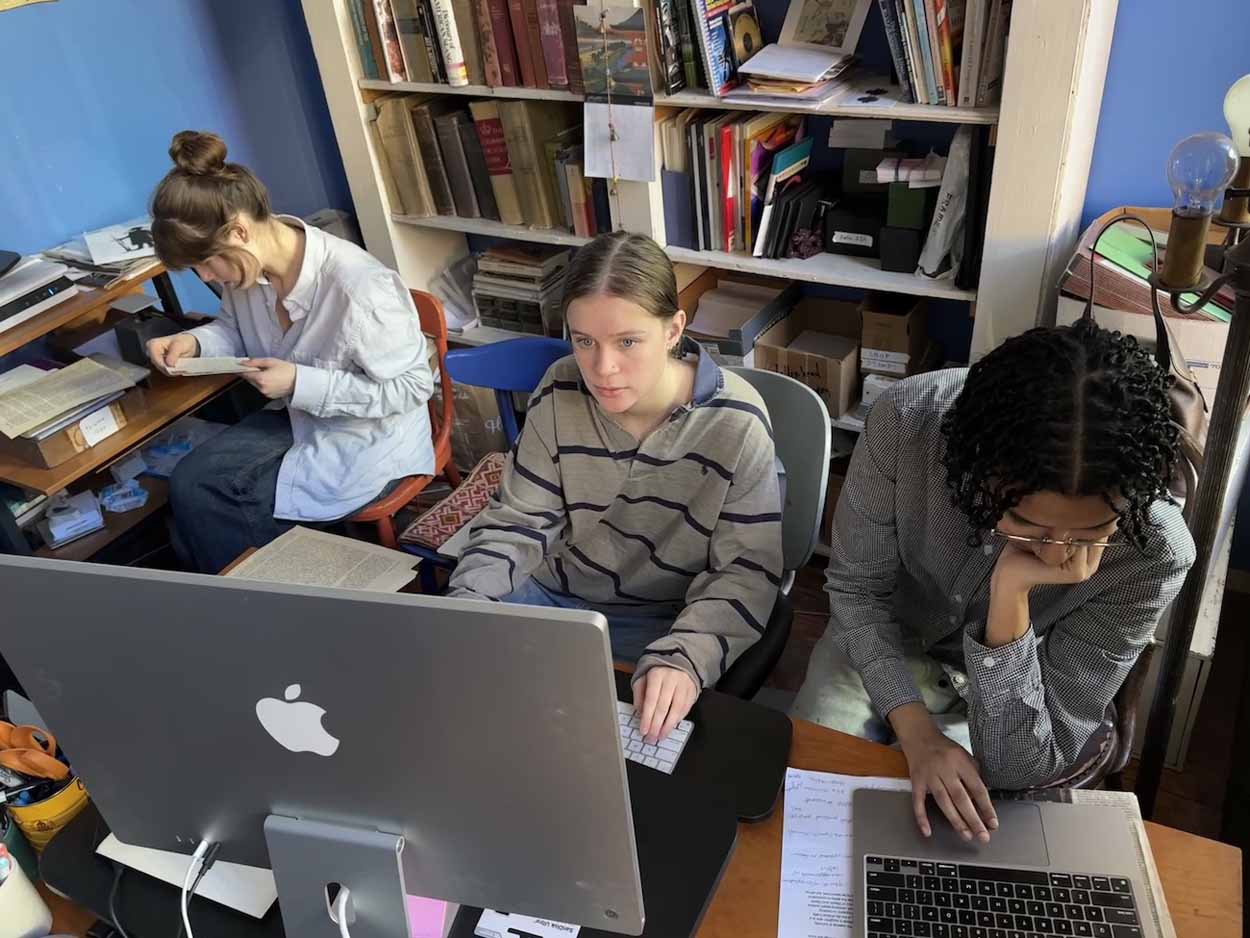
We cut next to the autumn of 2024, when Oberlin College put out its annual call to alumni and others for sponsors for internships for students during the college’s annual January Term, when students can undertake projects possibly unrelated to their regular curricula. In tandem with Maria Clark, my Bond Street office assistant, we sent a proposal to the program, figuring we might receive a reply from at least one interested potential archivist or historian. The only prerequisites we set were a willingness to commute to my loft, and the ability to read cursive. To our delight, three applicants responded: Lucy Freeman, Mara Landers, Paige McCallion. Unwilling to choose among them, Maria and I asked each if she would be willing to work with the two others; at the time, none were acquainted. Fortunately, all agreed, and we spent most of the Tuesdays and Thursdays of January 2025 here, doing preliminary sorting, scanning and transcribing letters.
Maria and I, guided by professional archivist Myriam Rotzetter in Paris (or Geneva, depending on where her other archival work takes her) and Paula Barr, my longtime friend and professional advisor, here in Manhattan, selected Artwork Archives, an online service for organizing projects like this, as the virtual repository for this phase of our work.
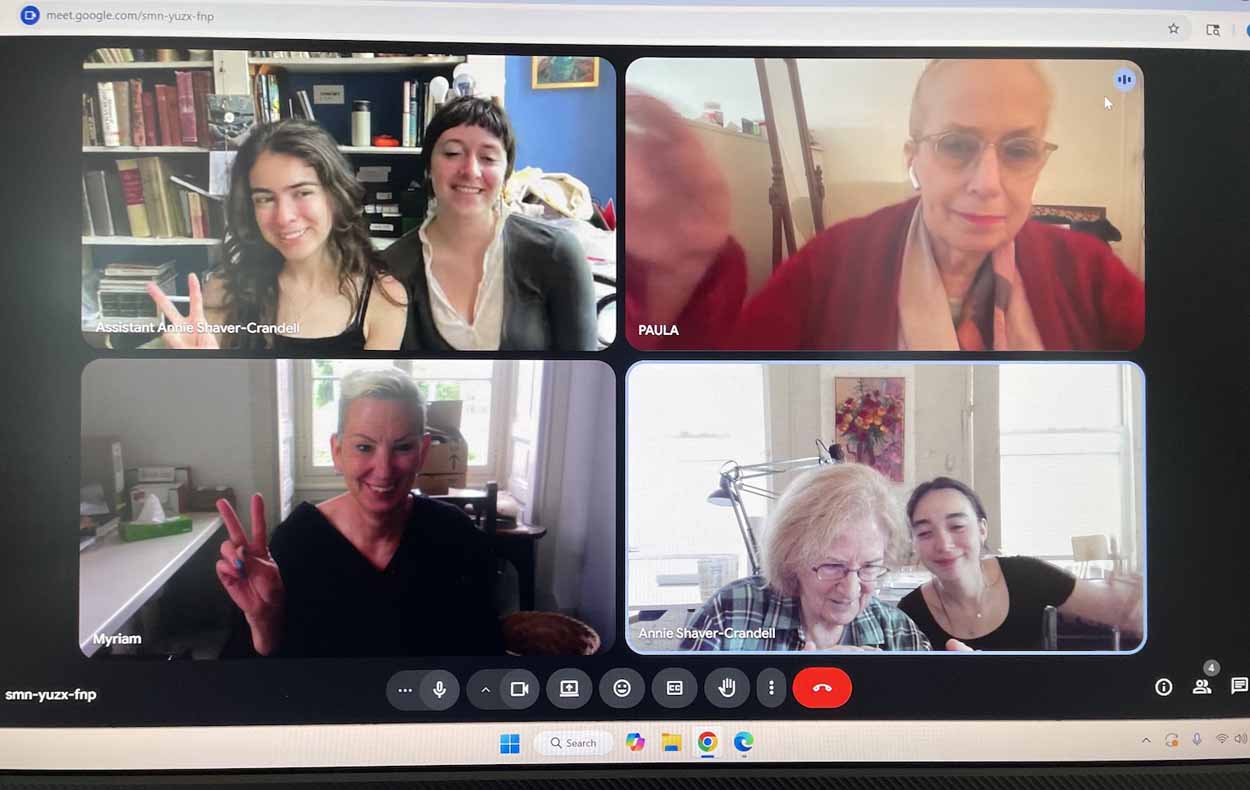
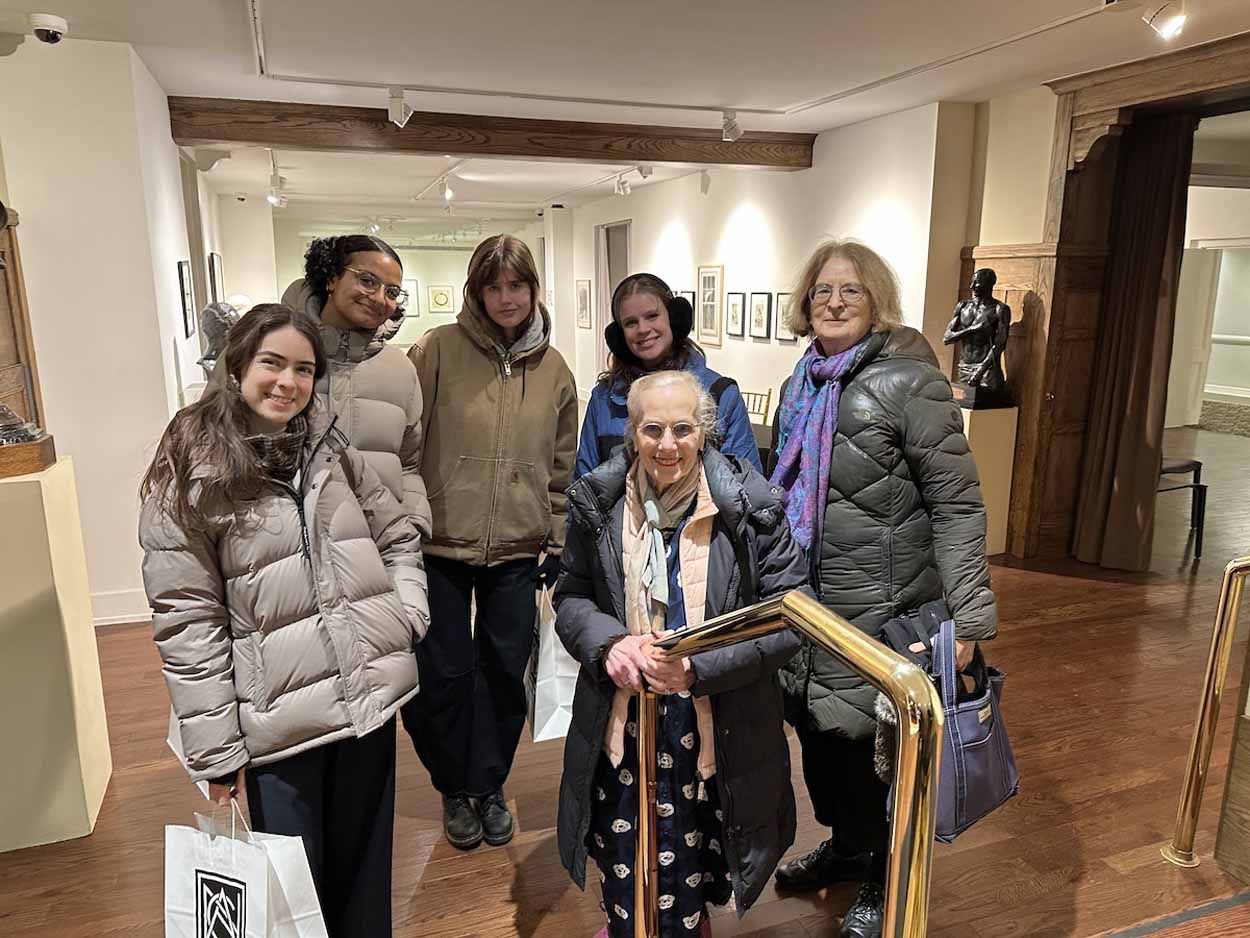
With the interns back on campus, we have more recently had the participation of Luna Doherty-Ryoke, who has done archival work before and has brought a unique perspective to some of the questions that have arisen as we’ve considered what should be included in archival deposits. And coming to join the team as this newsletter goes to press is Lilly Marinelli. This is a screenshot of last week’s remote meeting with the current crew.
We’re aiming to make a first electronic archival deposit to the archives of Oberlin College in early June.
Art Derived from History
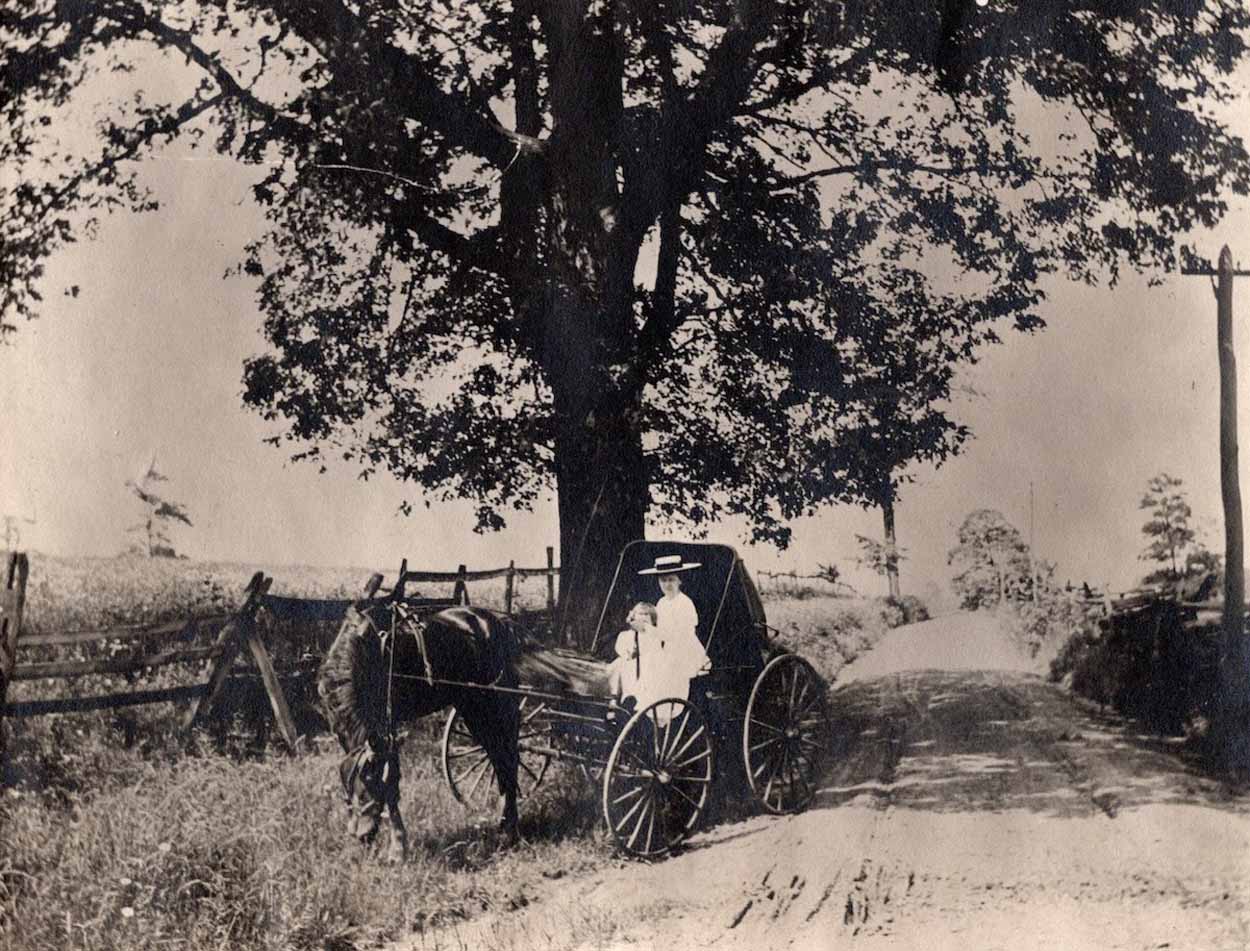
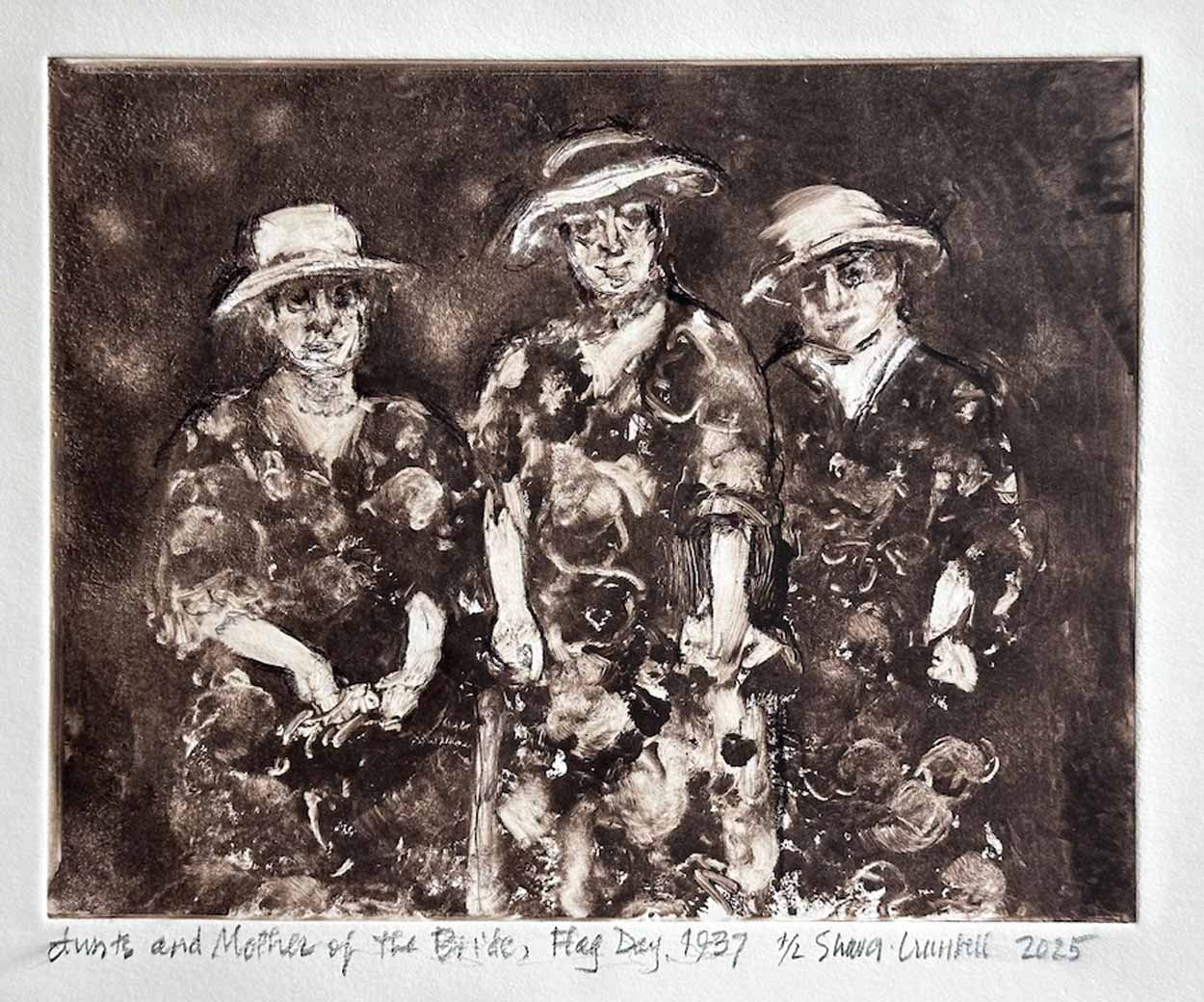
As the team has been going through the letters and photographs, I’ve been captivated by some of the images of family, especially images of those no longer living. As readers of this newsletter may know already, though I’m primarily a painter, I also love working in monotype, a printmaking medium easiest handled in monochrome inks. Here are two very recent monotypes based on photographs of each of my grandmothers.
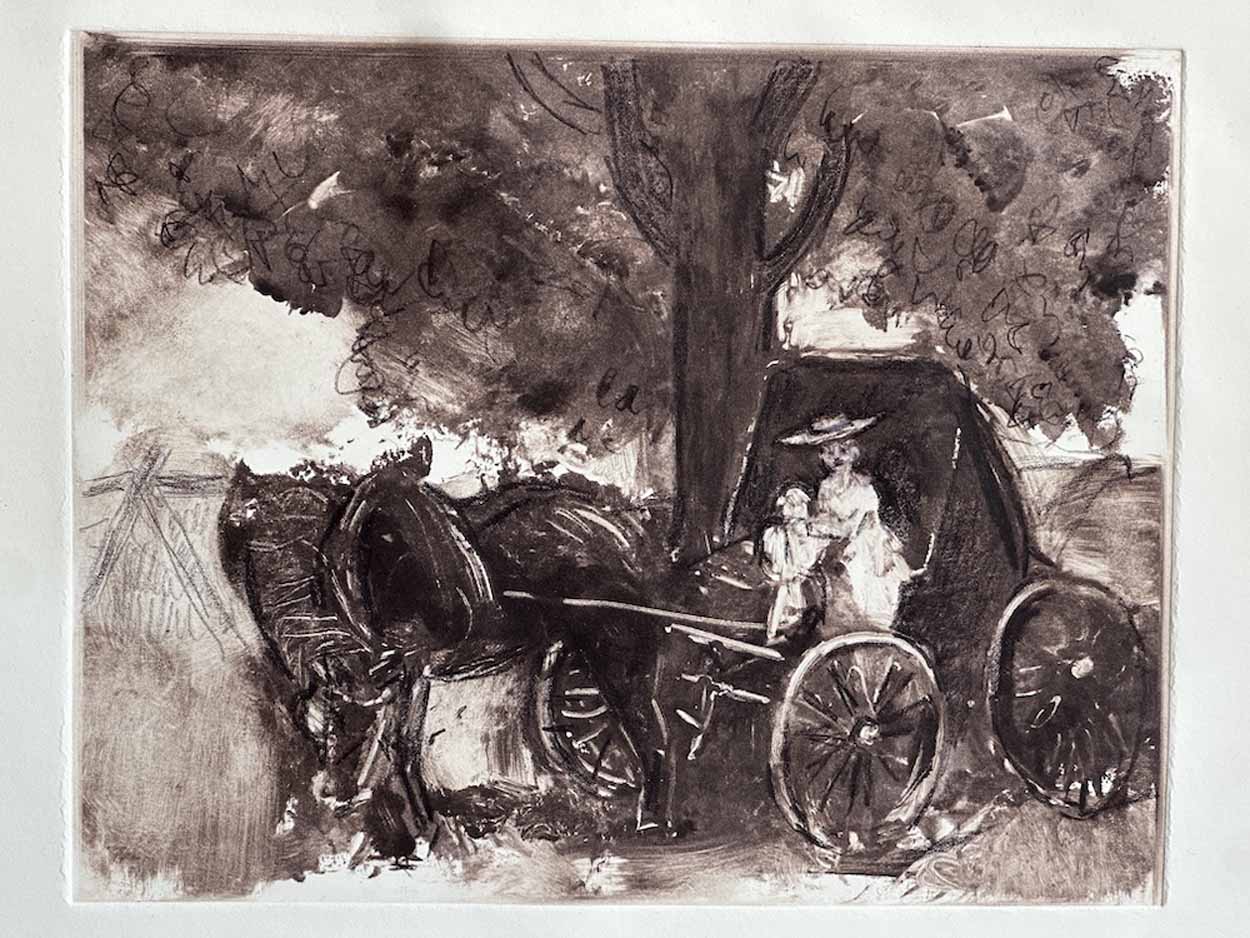
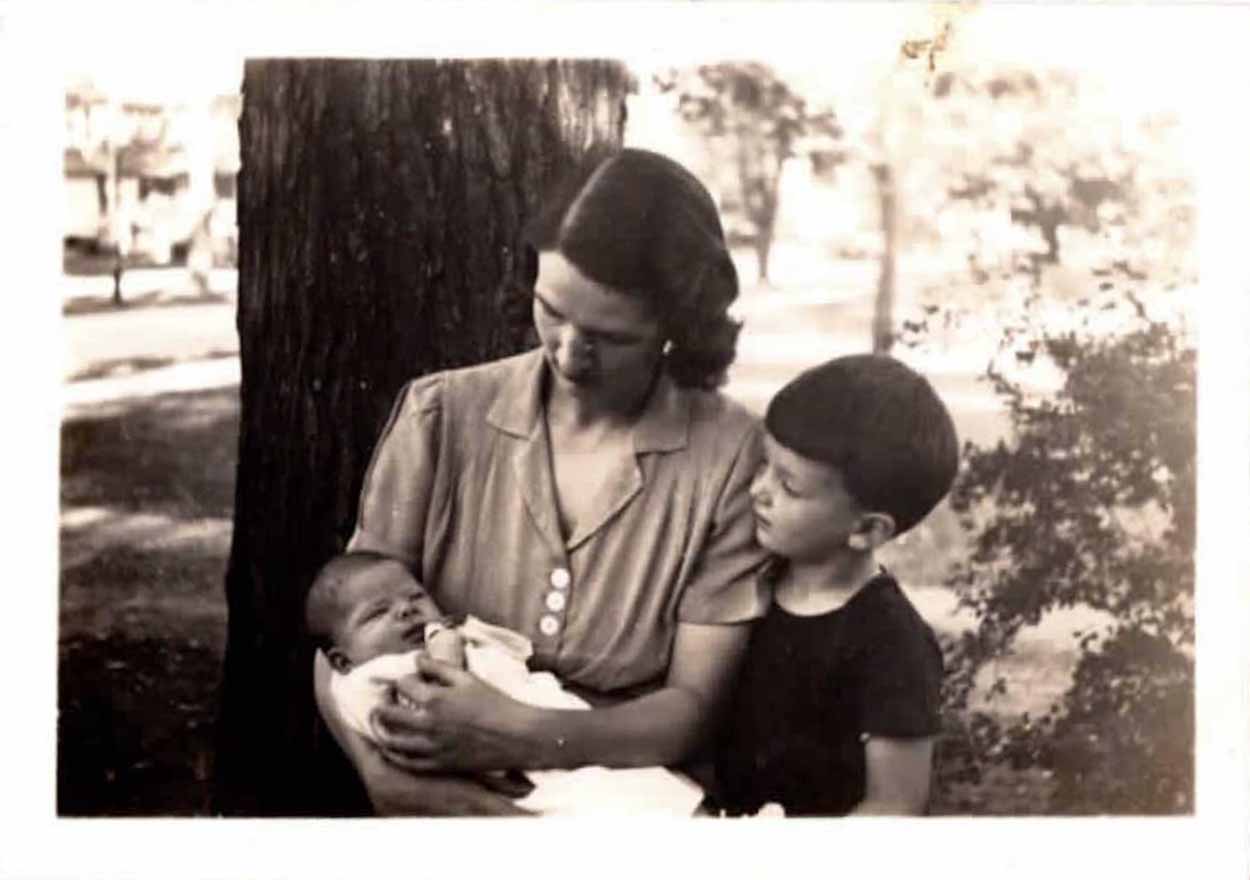
The source of the first monotype (shown above) is also precisely dated, July 10, 1910. This would have been the 25th birthday of my paternal grandmother, Elizabeth Phiniah Linn Shaver, and apparently the occasion for a country outing in a horse drawn carriage near Somerset, Pennsylvania. The little boy with her was Chester, then a two-year old. My grandfather Clarence was an amateur photographer as well as an attorney, processing his photos in the family bathtub. The conveyance was maintained at a livery stable in Somerset for his use when visiting rural clients. As Elizabeth’s father was a harness-maker at one point in his life, I suspect that Elizabeth also drove; she certainly has the reins in her birthday photo.
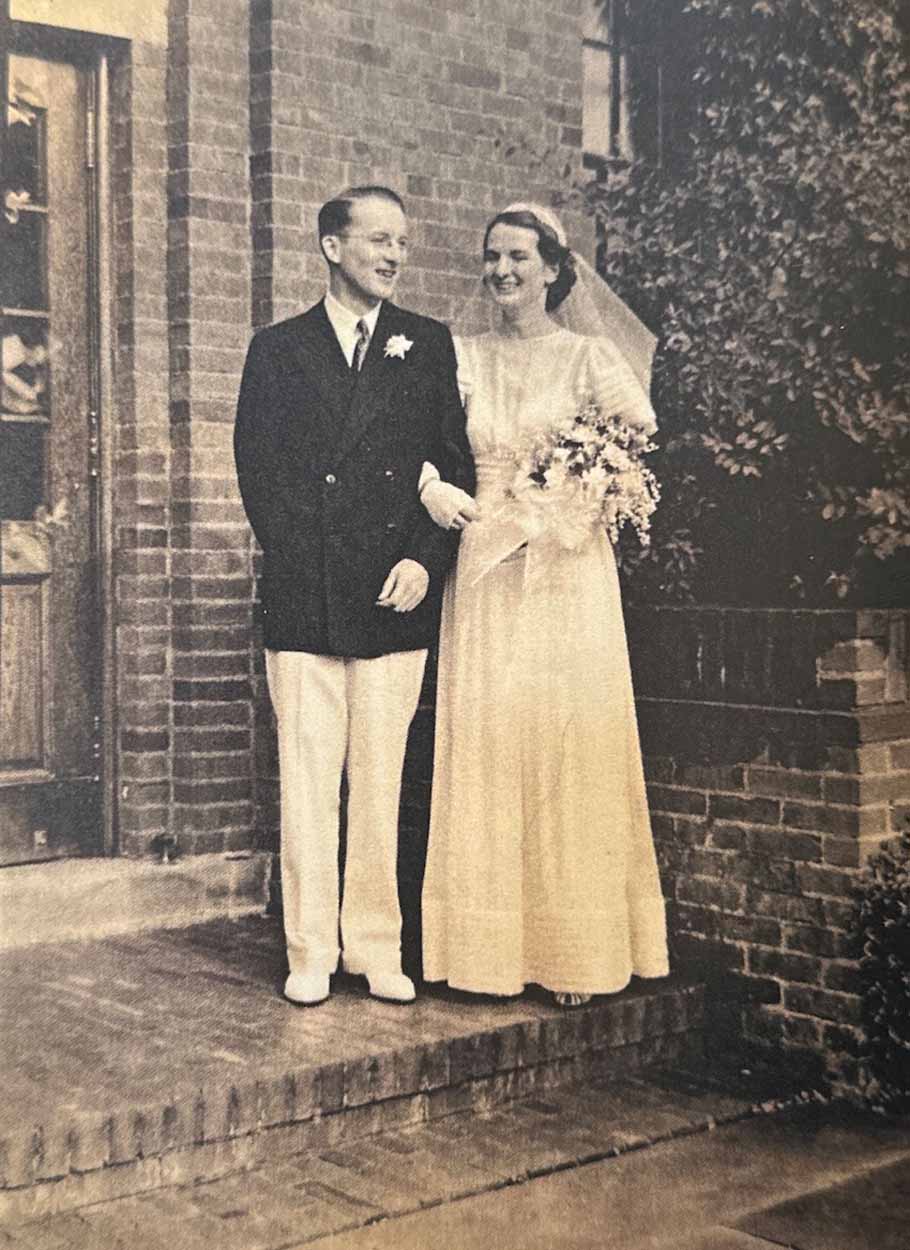
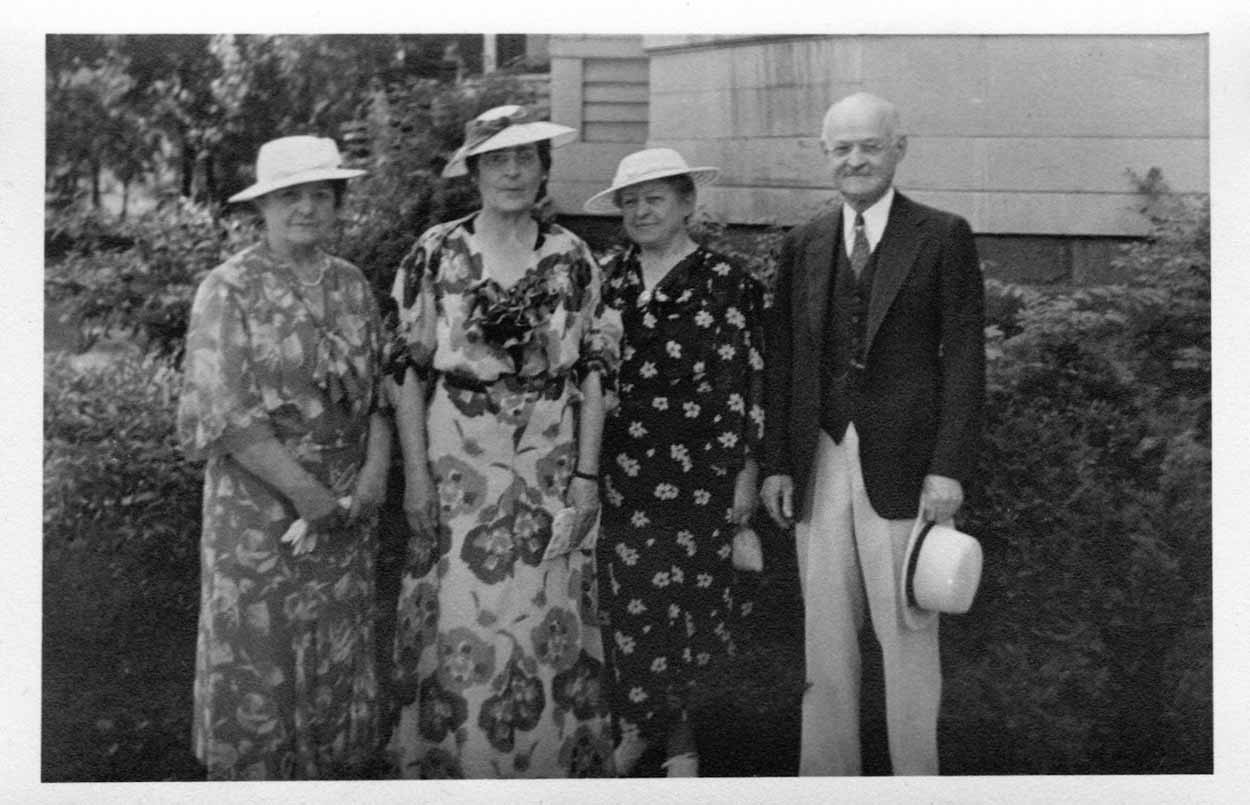
The threesome are Alice’s mother Annie Francis Crafts and her two sisters, the bride’s aunts, Eliza Francis and Mary Francis Evans, dressed in elegant flowered dresses and hats for Alice’s wedding to my father, Chester Shaver, on June 14,1937, in Oberlin.
Thoughts from the team at Bond Street on what this archival project means to them.
In January 2025, the other interns and I were faced with boxes upon boxes of personal letters and journals, which we organized, transcribed, and digitally archived. It was a beautiful project with so much material to explore and so much to discover about Alice Crafts Shaver and her correspondences, including many love letters. Alice was witty, clever, and a very caring mother, and reading her writing was never short of entertaining. Reading the letters gave me a new understanding of how people make sense of their lives and experiences through writing. It was a really interesting way to see how people think about and navigate relationships. The micro-internship was a wonderful experience that taught me more about Oberlin and how personal accounts can bring historical moments and memories to life.
– Mara Landers, Oberlin College Intern
A woman’s handwriting changes completely over the course of her lifetime. The minute writing activities we fill our days with, thank you cards, journal entries, letters, incrementally but definitely add up. At the end of highschool, Alice’s handwriting is floral and loopy. By the time she graduates college the excess fat has been stripped and filled with the urgency of a senior finishing her studies. After sorting hundreds of letters spanning the entire lifetime of Alice Crafts Shaver, I could write a hundred more things to add to this compendium. Perhaps it is because I am a young woman myself, with messy post-college handwriting, that I cannot help but be struck by this simple universal lifelong change. Losing some of the legibility of her childhood, Alice’s writing grew elegant, slim, and complex, becoming a voice to decipher. I am incredibly grateful to Annie, Maria and Paula who welcomed me into their cohort and I hope my contribution to this Bond Street team will help in the long winding road of Alice’s Archive.
– Luna Doherty-Ryoke, Archive Assistant
Ever since I was a young girl, I have kept every letter, note, and birthday card in a “special box” under my bed. I rarely re-read them, but for some reason I always thought it was important to keep them. Alice Crafts Shaver has taught me why. Over the last few months, I have been able to get to know Alice – a person I have only met inside of old letters and photographs – in a way that I never thought was possible. I know what her favorite stationery was as a teenager. I have watched her cry while writing to her sister, who lived too far away. I have felt her hands fold dozens of blue aerograms filled to the brim with words to her mother. As I unfold the creases she once created, I learn more about her and what her life was like. It is difficult to put into words exactly why this project is so important, but what I do know is that it is a privilege to get to know someone this way. I like to think that maybe Alice, too, was once a young girl who kept all of her letters in a box under her bed for a reason she didn’t yet understand.
– Maria Clark, Archive Manager
When you start an archive project, know that it will trigger very deep emotions. Know also, that you cannot throw anything out that you put your hands on. You never know when you’re going to need it.
– Paula Barr, Advisor